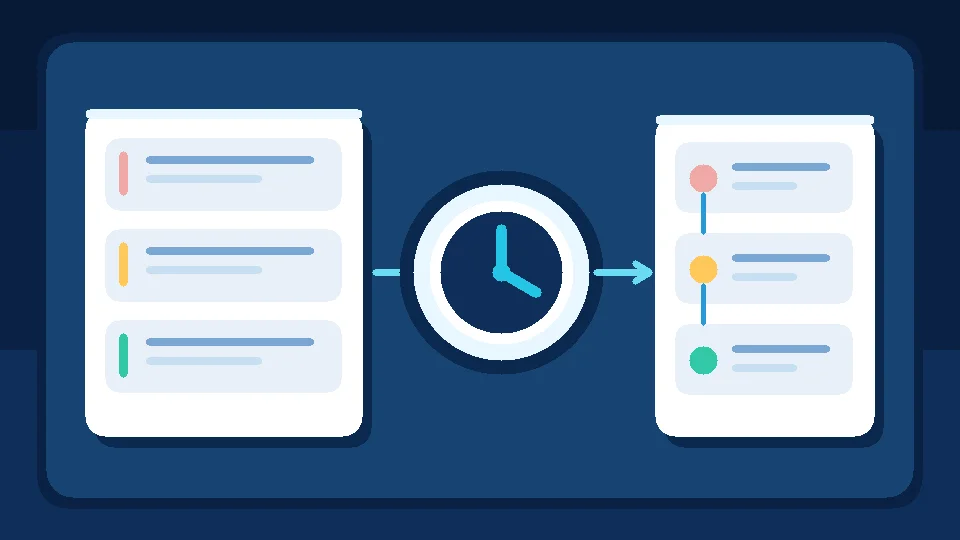
The payment page failed. Do not immediately ask the customer to pay again
When a customer messages your WhatsApp number saying checkout froze or displayed an error, “please try again” can be the wrong response. The interface may have failed while the first payment attempt was still processing or had already succeeded. The right decision begins with the payment provider's verified transaction status and the order record, not a screenshot alone.
This is a checkout and finance workflow issue, not an automatic capability of an AI chatbot.
Separate what the screen showed from what happened to the money
Collect the order reference, approximate attempt time, payment method and transaction reference if available. Never request card numbers, PINs or one-time verification codes in chat. Review the provider dashboard and trusted transaction records. Determine whether the payment succeeded, is pending, failed conclusively or needs investigation.
If it is pending, neither confirm the order as paid nor request a second payment. If it succeeded, reconcile the transaction with the correct order before confirming. If it failed conclusively, offer a new attempt through an approved payment link after checking that no other transaction exists for that order.
Why one order needs one coherent payment history
Stripe's technical documentation recommends one PaymentIntent per order or customer session so attempts can be tracked and that flow produces at most one successful charge. Its idempotency guidance explains how an API operation can be retried safely without accidentally duplicating the action.
These are examples from an international payment provider, not a claim about how every Egyptian gateway behaves. Confirm the equivalent status, notification and reconciliation mechanisms with your own provider.
A useful reply while the team investigates
You can say: “We understand the payment page did not confirm the result. Before asking you to pay again, we will check the official transaction status. Please share your order reference only, not any card details or verification codes.”
After checking, give a specific status: “payment confirmed”, “the attempt failed and you can use this approved link”, or “the status is still under review and our team will follow up”. Do not invent a guaranteed resolution time.
Operational example and ownership
Illustrative scenario, not a customer case: A customer attempts to pay for an appliance but never sees a success page. Sales receives the message, while only the finance or payments owner can confirm settlement. The team pauses a second attempt, checks the order and gateway record, then communicates the verified outcome.
Create a separate “payment under review” state with a named owner and follow-up time. Do not classify it as a confirmed order or an abandoned sale. Track disputed attempts, time to verification and cases where two payment attempts appeared against one order. A screenshot is not final proof of settlement.
What an AI assistant can help with
Current Mr. AI information describes knowledge-based replies, follow-up, next-step tracking and conversation summaries. It does not establish automatic payment-gateway verification or duplicate-charge prevention. Financial confirmation must remain with the authorized system and team.
If customers send transfer screenshots instead of checking out online, read Verifying payment proof received on WhatsApp. A useful next step is to simulate a checkout that never displays confirmation and make sure the team checks transaction status before requesting another payment.