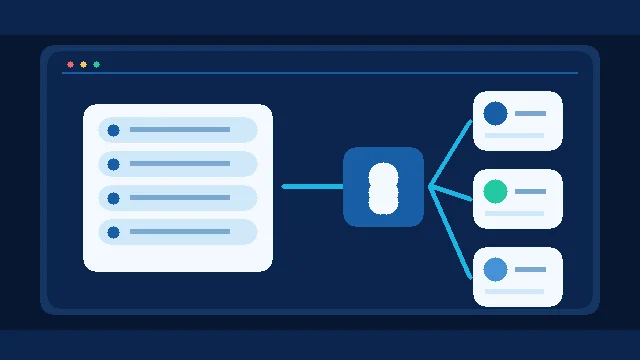
When a business buyer asks a technical question or requests a commercial exception, assigning the conversation to the next available rep may improve queue speed without improving the answer. Route by the expertise and decision required first, then account for workload. That is a different problem from routing by branch or simply sharing one WhatsApp number across several employees.
Identify the decision behind the question
Capture three signals: which product or service is involved, whether the buyer needs routine information or a specialist decision, and whether there is a time constraint. Do not escalate every technical-sounding word. A documented answer may be enough for the frontline team.
Imagine an Egyptian office-equipment supplier. “Can you deliver to Cairo?” belongs with frontline sales. “Will this system work with our existing devices?” may need a technical specialist. “Can you approve a discount on an annual agreement?” needs commercial authority. These are hypothetical operating examples, not claims about an automatic Mr. AI routing feature.
Give the conversation one accountable owner
A department label is not ownership. Each opportunity needs a named current owner, the reason for escalation, missing information, an agreed response time and a backup if the specialist is unavailable. Otherwise a lead can sit in a shared queue while everyone assumes another person is handling it.
Avoid a cycle where Sales sends the buyer to Technical, Technical sends them back, and the buyer repeats the entire request. A concise handoff summary and one accountable owner are more useful than several generic transfer messages.
Start with a rule you can actually test
Create four categories: routine inquiry, technical question, commercial approval and after-sales case. Assign an owner and backup to each. When one conversation includes two categories, keep one accountable owner who coordinates with the other team. A new question should not automatically reset ownership.
The WhatsApp Business Platform supports interactive messaging that can help structure customer conversations. That does not establish that any chosen tool provides specialist-based automatic routing. The routing rules themselves require workflow design and verification.
Review the right measures after two weeks
Sample conversations and ask: how often did the inquiry reach the right decision maker on the first handoff? How often did staff request information already provided? Which cases had no named owner or next-response time? Which transfers added no value? Segment by question type, not only by messages per employee.
If location is the actual routing variable, see our multi-branch WhatsApp guide. If the problem is when AI should step aside, read human handoff signals.
Where Mr. AI fits
The current FAQ confirms replies grounded in company knowledge, conversation summaries, follow-up and human handoff. These can support a better process, but they do not establish a built-in skill-based routing or permissions engine. Verify who can assign cases, how backups work and what happens when no specialist is online before relying on any product.
Review ten anonymized historical inquiries to locate the real bottleneck. Then book a demo or start a trial to test the relevant parts of your workflow.
Reference: WhatsApp Business Platform features. The routing model here is operational guidance, not a guaranteed platform feature.