Your team books a product demo, prepares the presentation, and the prospect does not join. The instinct may be to send “Where are you?” or several follow-ups. But a missed sales meeting is not proof that the account has lost interest, and it is not permission for unlimited messaging. The better process separates booking confirmation, the reason for absence when known, and the next mutually agreed step.
Was the meeting confirmed in the first place?
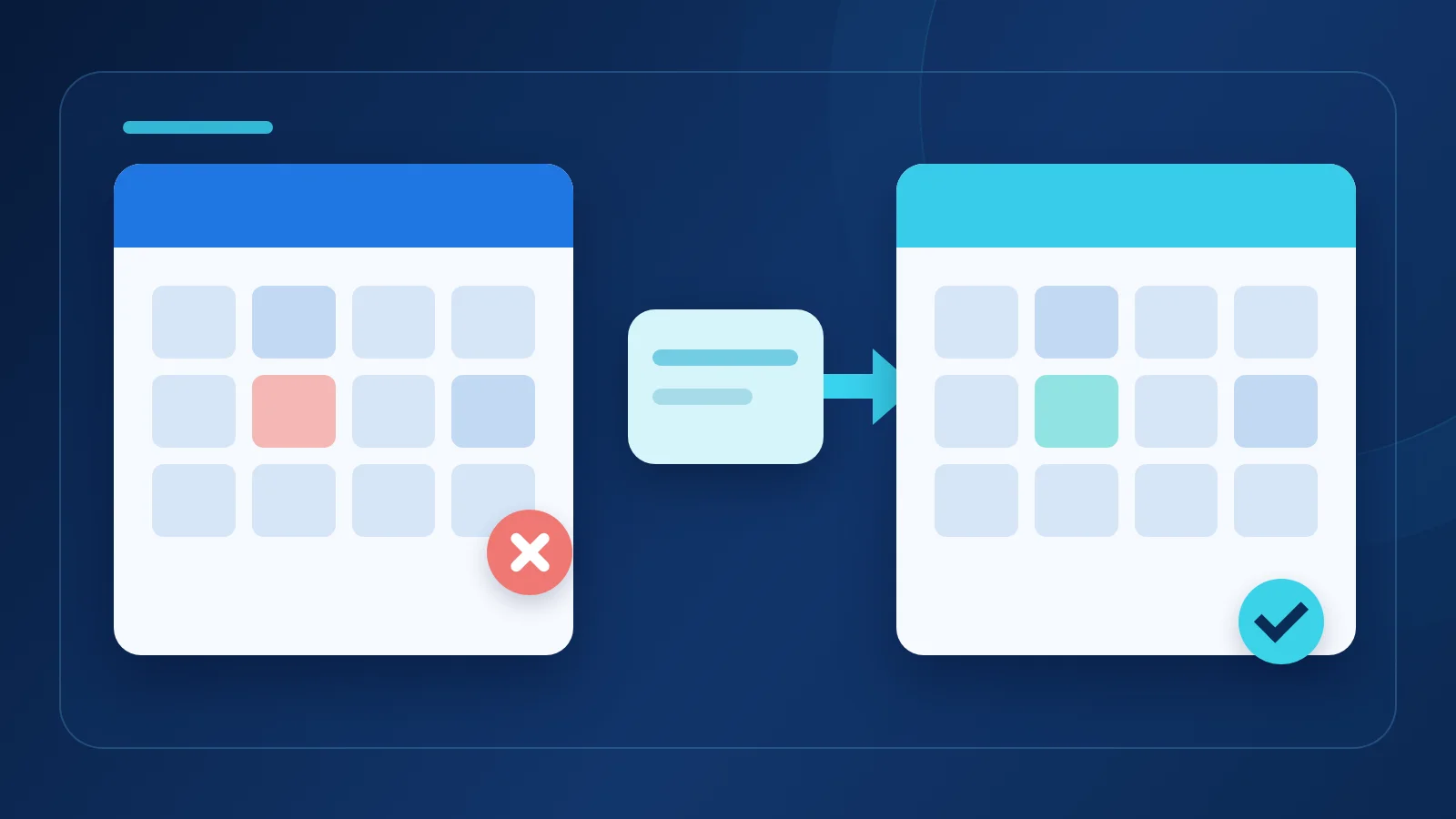
Sometimes a salesperson says “Tuesday works” while the buyer understood Tuesday was only a proposal. Sometimes the link was wrong, the time zone was unclear, or a reschedule never reached every attendee. Before recording a no-show, check the invitation, meeting link, confirmation message, time zone and expected attendees.
If there was no clear acceptance, record “unconfirmed meeting” rather than “prospect did not attend.” The wrong label distorts sales reporting and can turn a scheduling mistake into an imagined rejection.
One useful follow-up beats a guilt trip
After a reasonable interval under your team's policy, send a concise note: “We had time reserved to discuss how your team handles customer inquiries. Not sure the timing still worked for you. If this is still a priority, we can find another slot or share a short summary of the questions we planned to cover.” This is an illustrative script, not a real customer message.
Offer two sensible paths: a new meeting time or an asynchronous summary. Do not paste the entire product pitch into the follow-up, and do not demand an explanation. If the buyer says the project is no longer relevant, respect that and record the reason they actually gave.
Reschedule, pause or close?
Distinguish three situations. A buyer who apologizes and proposes a new time needs a fresh confirmation of attendees, agenda and link. A buyer who does not reply may warrant a limited follow-up under your consent rules, not an endless sequence. A buyer who says priorities have changed needs a pipeline update and, only if invited, a later check-in.
For WhatsApp Business Platform, the official messaging policy updated September 23, 2026 requires opt-in for business-initiated contact and approved templates outside the 24-hour customer service window. Honor opt-outs. Booking a demo should not be treated as blanket consent to future marketing messages.
A small record makes the sales data more honest
Capture the account, opportunity stage, expected decision-maker, whether the meeting was confirmed, reason for absence if stated, last follow-up attempt and agreed next step. Make “reason unknown” a valid value. Do not turn “busy” into a fact when the buyer never said it.
Each week, review confirmed meetings not held, mutually accepted reschedules, preparation time spent on unconfirmed calls, and opportunities that actually advanced after follow-up. A rebooked calendar slot is not the same thing as progress toward a purchase decision.
Imagine an academy director missing a demo during a busy enrollment period. If they request a delay of one week, the reason is known. If they simply disappear, enrollment season remains a hypothesis, not an established explanation. That distinction protects the quality of your pipeline notes.
Where conversation summaries help, and where they do not
Mr. AI supports conversation summaries, company-knowledge replies and follow-up with human takeover on WhatsApp, Messenger and website chat. We do not claim a native calendar integration, automatic no-show detection or autonomous meeting rescheduling without separate configuration. The sales team owns the follow-up decision and timing.
This differs from clinic appointment confirmation, which deals with a patient's service appointment rather than a B2B discovery meeting. For earlier pipeline stages, see qualifying leads from customer messages.
Review your last ten missed meetings and find out how many were genuinely confirmed. Then try Mr. AI on follow-up and summary scenarios before increasing your message volume.