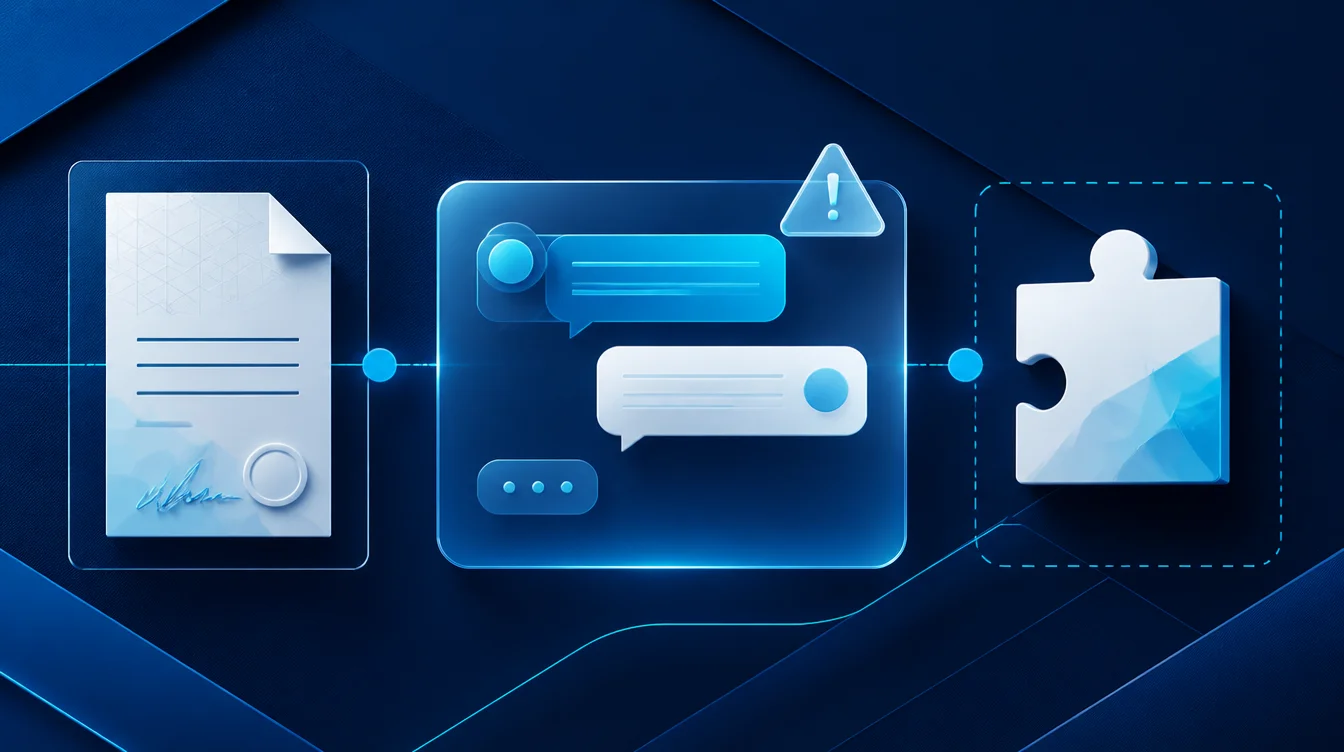
A customer messages your team: "Why isn't this feature included? I thought it was part of what we bought." A defensive "that's not in your contract" can damage trust before anyone checks the evidence. Promising to build the feature can be just as harmful. First establish whether this is a defect in an agreed service, an expectation created during sales, or a genuinely new request.
Three different problems can sound like the same complaint
First, the feature was explicitly included in the approved proposal or service description but does not work. That is an issue with delivering an existing commitment. Calling it an enhancement request simply because the fix is difficult is misleading.
Second, the feature is not in the formal scope, but a sales message, demo or presentation may have reasonably led the buyer to believe it was included. The team needs to review what was communicated, not just what the current feature list says.
Third, the customer is requesting a new capability that was never part of the agreed offer. That may be a useful product request or a paid change, but it is not an automatic entitlement and it should not be promised without approval.
These are operational categories, not a legal interpretation of any particular contract.
Check the evidence before assigning a category
Ask the customer for a specific example of what they expected and what happened. Review the accepted proposal version, relevant sales messages, product descriptions and any documented changes. Do not assume the customer made the mistake simply because two internal teams use the same term differently.
Consider a fictional company buying a conversation management tool. Sales says the platform includes "reports." The buyer assumes that means a custom accounting export, while the product team means an on-screen performance dashboard. One vague word can create a genuine expectation gap. The next step is to identify what was represented, what was delivered and who can decide how to resolve the difference.
ISO 10002:2018 offers general guidance for handling complaints, reviewing their causes and improving organizational processes. ISO confirmed the edition in a 2023 review. It is a global methodological reference, not an Egyptian legal requirement and not evidence of a Mr. AI certification.
A first reply that does not prejudge the answer
A useful response is: "Thanks for flagging this. We'll review the agreed service description and the earlier communication to determine whether this is a problem with an included feature or a request for an additional capability. We'll give you a clear update after that review."
Avoid saying "we'll add it soon" unless an authorized team has actually approved a timeline. Ask how the issue affects the customer's work. Does it block the core service, interrupt a particular process or represent an optional improvement? The impact matters more than the emotional intensity of the message.
Give the case one owner and a decision path
Assign an accountable person, collect the relevant agreement and messages, and document the outcome. The case should end in one of three paths: repair a defect within scope, address an inaccurate expectation created during sales, or evaluate a new out-of-scope request. Record who can approve any compensation, change or revised commitment, and when the customer will receive an update.
Do not let an AI assistant independently approve refunds, free development work or contract changes. If the agreement is ambiguous, escalate to a human decision maker instead of issuing a definitive interpretation.
Fix the upstream sales language
If customers repeatedly say "we thought that feature was included," audit your proposals, demos and FAQs. The root cause may be ambiguous language or an overstated promise rather than customers failing to read carefully. Keep historical records of what was actually said so that future changes do not erase the evidence.
This is distinct from our general WhatsApp complaint management guide, which covers intake and resolution workflows. The specific issue here is scope expectations and the trust cost of handling them badly.
Where Mr. AI can help and where it cannot
According to the current Mr. AI FAQ, the platform helps teams answer from company knowledge, summarize conversations and hand cases to staff when human judgment is required. That can help preserve complaint context, but it does not adjudicate contracts or authorize a new feature or financial remedy. Review five such cases with sales and support, then try Mr. AI to assess whether its knowledge and follow-up workflow fits your operation.